From Five Ways of Looking at a Person
The lens audit
Eight questions, about 10 minutes. Copy these pages and hand them round a team if they're useful.
PDF, 2 pages, 56 KB
Two rules before you start, and they decide whether it's worth doing at all.
Answer from your last 5 real difficult conversations, not from how you think you generally behave. Answer from memory and the result comes back flattering. Answer from the last 5 real ones and you'll get a different result, probably closer to the one your colleagues would give for you.
It's a count of your recent conversations. It tallies which lens you've reached for lately. It says nothing about what kind of manager you are.
The questions
1. The corridor sentence. Somebody asks what the meeting is about and you answer in one sentence with no time to compose it. Write down the last 5 you actually said.
2. Your first real question. In the last 5 difficult conversations, what was the first question you asked after the throat-clearing? Write them down verbatim if you can.
3. Your notes. Go and read your own scribbles from the last 3 difficult meetings. Not the formal minute. Do they contain symptoms, adjectives about the person, times and quotations, causes and theories, or your own reactions?
4. The meeting you would give away. If you could hand one type of difficult conversation to somebody else and keep the rest, which would you hand over?
5. Irritation. Think of the last person at work who irritated you disproportionately. Write the sentence you would have said about them to a colleague you trust.
6. Silence. When somebody goes quiet in a difficult meeting, what do you assume is happening? Write the first answer, not the considered one.
7. Explanations. When somebody gives you a reason for something that has gone wrong, what do you do with it first? Test it, accept it, discount it, record it, or feel differently about them?
8. The handover. If you were handing this person to a new manager tomorrow, what would you say about them in 2 sentences?
Reading your answers
Do not score this. Sort it.
Go through your answers and mark each one with the lens it points at.
- Broken: struggling, not coping, needs support, something's going on, worried about them, too much on.
- Different: he's just very, she's one of those, typical of, that type, personality clash.
- Facts: dates, times, quotations, incidents, the policy, the threshold, what was said.
- Reasons: because, what's driving it, what caused it, the situation, the pressure they're under.
- Reflections: winds me up, I find it, it bothers me, my own reaction, something about me.
Count them. Not to get a score. To see whether one lens has more than half of your answers.
Then answer the two questions that actually matter.
Which lens is missing entirely? That gap is more informative than your top count. A manager with no Facts answers anywhere is going to be in trouble the first time something becomes formal. A manager with no Reasons answers is running conversations that never find out why anything is happening.
Would the meetings in question have been better run on a different one? Go back through the 5 and ask it about each. Some of them your default was right for, and now you know that instead of assuming it.
The version that is worth more than this one
Ask a colleague who has sat in difficult meetings with you to answer questions 1, 3, 6 and 8 on your behalf.
They answer immediately, they are usually right, and the answer is frequently unwelcome. The people around you can see your default because they have watched your behaviour across dozens of instances without being inside your reasoning, which is the only position from which a default is visible at all.
If you only do one part of this appendix, do that part.
Credit line
Hazel Crowe, The Hazel Crowe Toolkit: The lens audit. From Five Ways of Looking at a Person. https://hazelcrowe.com/toolkit/lens-audit
From Five Ways of Looking at a Person by Hazel Crowe, Appendix B. Free to print, copy and share with this line kept on. The Hazel Crowe Toolkit, version 2026-11-04.
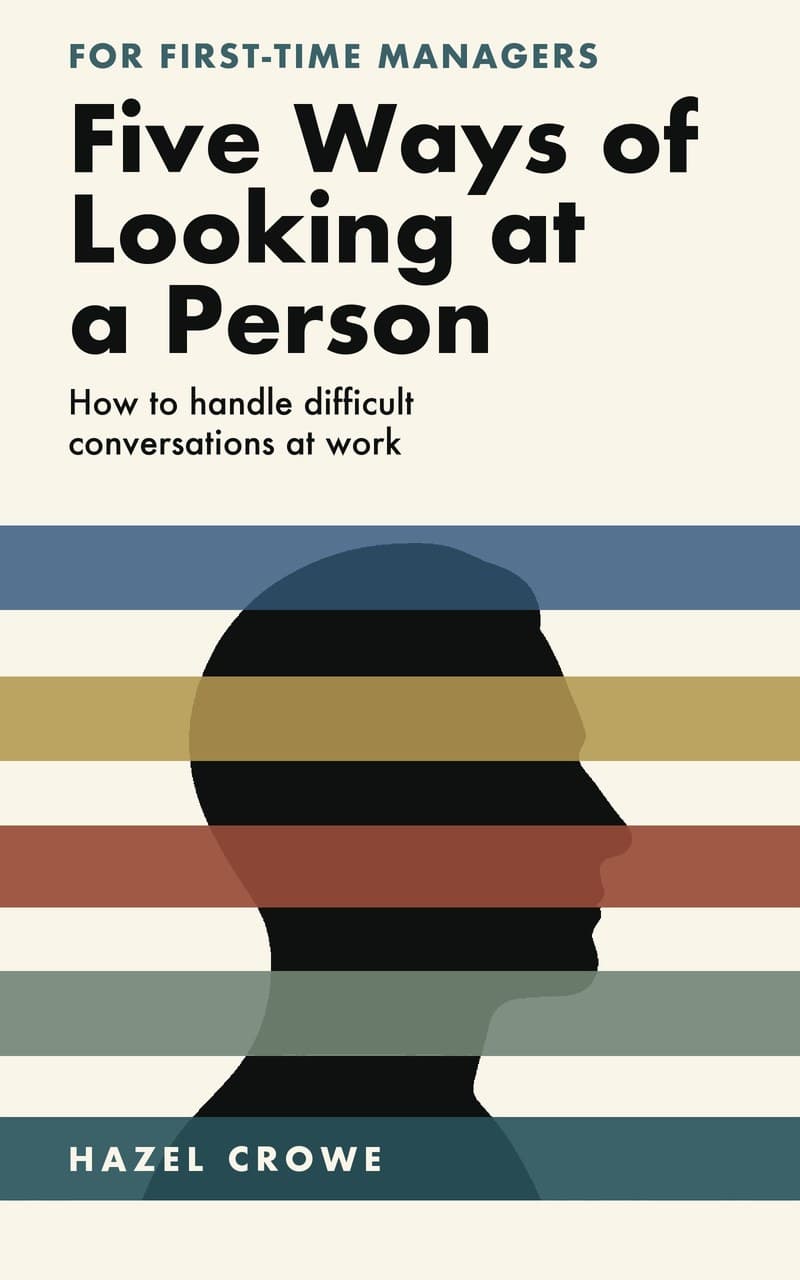
Where it comes from
Five Ways of Looking at a Person
How to Handle Difficult Conversations at Work: A First-Time Manager's Guide to Feedback, Conflict and the Formal Process
The room where both of you still have to work together on Monday.
More from the toolkit
- The 10 minutes beforeFrom Five Ways of Looking at a Person
- The counter cardFrom Nobody's Fool
- The 30-Day PlanFrom Articulate
- The Culture Reality CheckFrom Culture Is What Management Tolerates