From Five Ways of Looking at a Person
The 10 minutes before
This is what I watched the good managers do. It isn't a claim that doing it will make you calmer, more confident or better at these conversations, because I've no way of knowing that. Chapter 12 explains why a page like this shouldn't pretend to.
Use what's useful. Ignore the rest.
The line
What does this meeting have to decide, and which lens decides it?
Write it at the top of the page. Not in your head. In the meetings I sat in on, the managers who'd written it down behaved differently from the ones who held it in their heads, and I do not know why.
Examples:
- Decide whether the 3 incidents happened. Facts.
- Get the handover fixed. Reasons, on a Facts base.
- Find out what has changed for her. Broken, provisionally, and ready to put down.
The file
Read it. Recently. Close enough to the meeting that you can find a document without shuffling through a folder while somebody watches you.
Know the dates. Know where each item came from and who saw it. Chapter 6: for every item, who saw this and what exactly did they see.
The 3 questions, for yourself, silently
- What about this irritates me more than it should?
- Would I be reacting this way if a different person had done it?
- What am I hoping they say?
Nobody in the meeting ever needs to know you asked these. Preparation the other person can see is not preparation.
The sentence
Write the hardest sentence you have to say. One sentence, in the words you will use. Say it out loud once.
Do not write the paragraph. Managers who scripted the opening delivered it and then lost the thread when the reply did not match. Everything after the first sentence is a real conversation.
What you will do if it goes wrong
Decide these now: what you'll do, whatever you end up saying.
- If they cry: offer a break. Offer to continue tomorrow. Do not speed up.
- If they walk out: let them, and write to them the same day.
- If they raise something about their health: stop, do not assess it, refer it to occupational health with consent. Chapter 20.
- If they tell you something that changes the picture: in an informal meeting, take it. In a formal one, adjourn, investigate, put it to them, reconvene.
- If they are right: say so, in the meeting, and take the point out of the pack.
The room and the clock
- A door rather than glass, if you have the choice.
- Enough time, plus 15 minutes you do not expect to need.
- Not the last slot before a weekend.
- Nothing booked immediately after.
Two minutes before
Arrive first. Sit somewhere you can be reached. Have the paperwork closed until you need it.
It looked different from the other chair. That is the whole of the claim.
What is not on this page
Breathing, posture, visualisation, standing in a particular way, getting into the right frame of mind. Chapter 12 sets out why: the best-known piece of preparation advice of the last 15 years was publicly withdrawn by the researcher who produced it.
If those things help you, do them. Chapter 12 has the rest of it.
Credit line
Hazel Crowe, The Hazel Crowe Toolkit: The 10 minutes before. From Five Ways of Looking at a Person. https://hazelcrowe.com/toolkit/10-minutes-before
From Five Ways of Looking at a Person by Hazel Crowe, Appendix C. Chapter numbers refer to Five Ways of Looking at a Person. Free to print, copy and share with this line kept on. The Hazel Crowe Toolkit, version 2026-11-04.
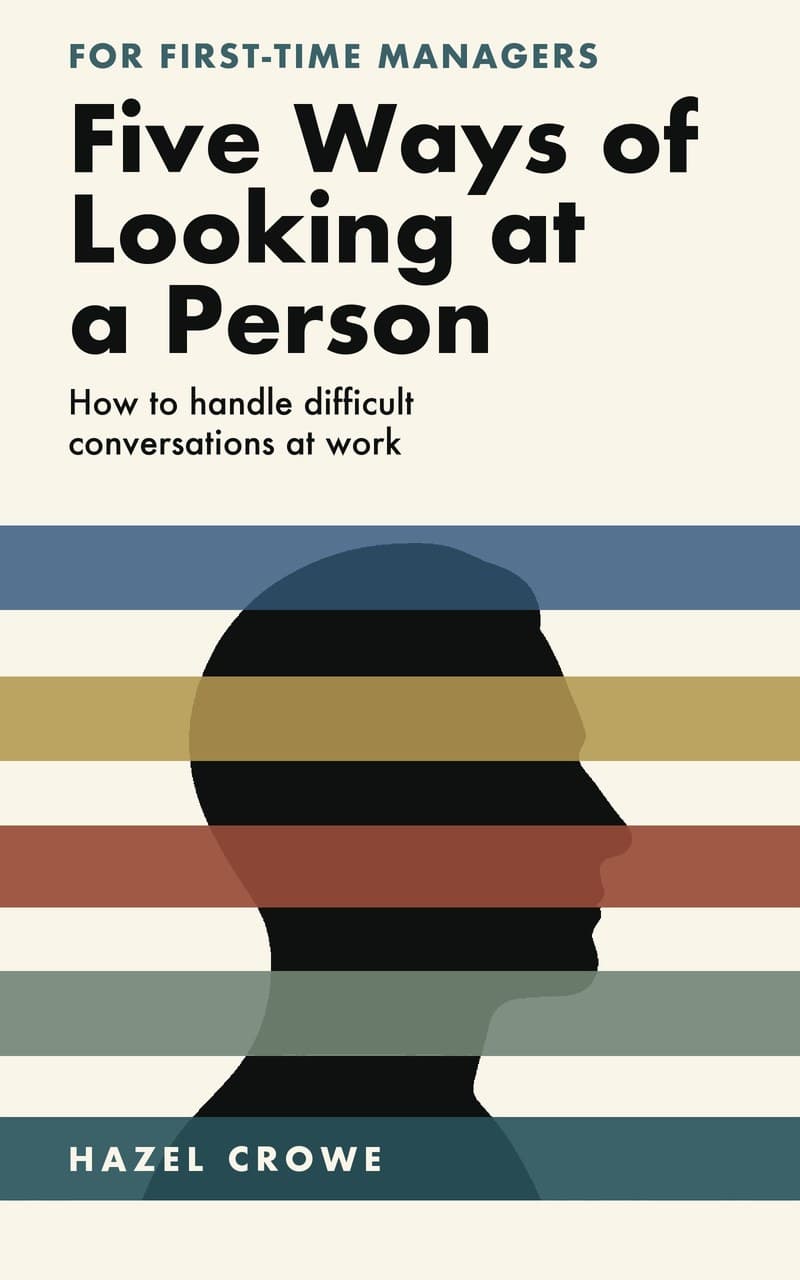
Where it comes from
Five Ways of Looking at a Person
How to Handle Difficult Conversations at Work: A First-Time Manager's Guide to Feedback, Conflict and the Formal Process
The room where both of you still have to work together on Monday.
More from the toolkit
- The lens auditFrom Five Ways of Looking at a Person
- The counter cardFrom Nobody's Fool
- The 30-Day PlanFrom Articulate
- The Culture Reality CheckFrom Culture Is What Management Tolerates