For first-time managers
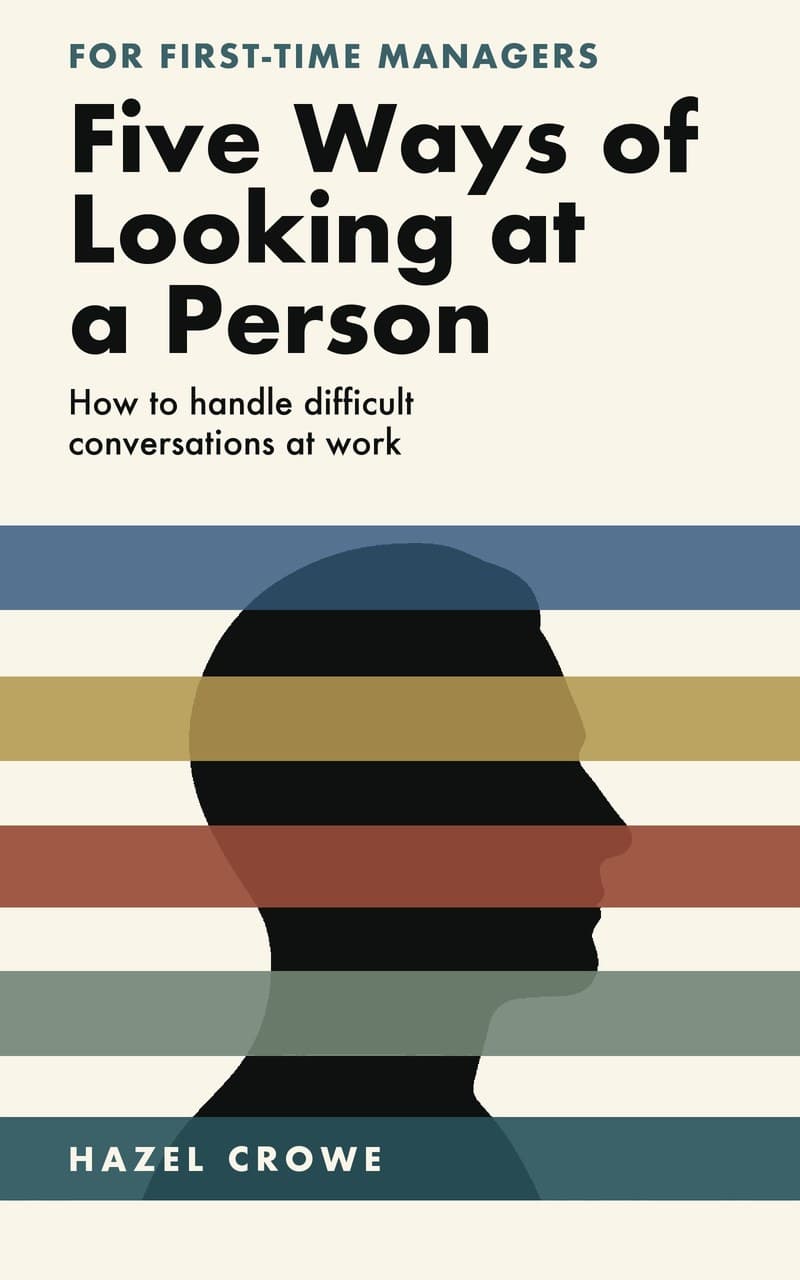
Five Ways of Looking at a Person
How to Handle Difficult Conversations at Work: A First-Time Manager's Guide to Feedback, Conflict and the Formal Process
The room where both of you still have to work together on Monday.
Hazel Crowe
About the book
You've read the policy twice. Nobody has ever shown you how to actually run the meeting.
This is a book about how to have difficult conversations at work, for first-time managers and small business owners who have been handed a process and told to be fair. Most hard conversations are decided before anyone speaks.
Hazel Crowe spent 31 years in rooms like that: 20 on the buying side, 12 of those also sitting beside colleagues in disciplinaries and grievances as their workplace representative, then 11 running employee relations herself. Around 1,200 difficult conversations, on both sides of the table. In almost every one, the ending was settled by how the person in charge had already decided to see the person opposite.
You can see someone as broken and needing fixing, as a type, as a set of facts, as someone with reasons you can't see yet, or as a mirror of your own standards. Each one is right in some meetings and wrecks others. Most managers use one and have never noticed which.
No scripts and no brain science. Nearly every chapter ends with the same 30 seconds of a conversation played twice, through two lenses, with both endings shown.
How it fits the set
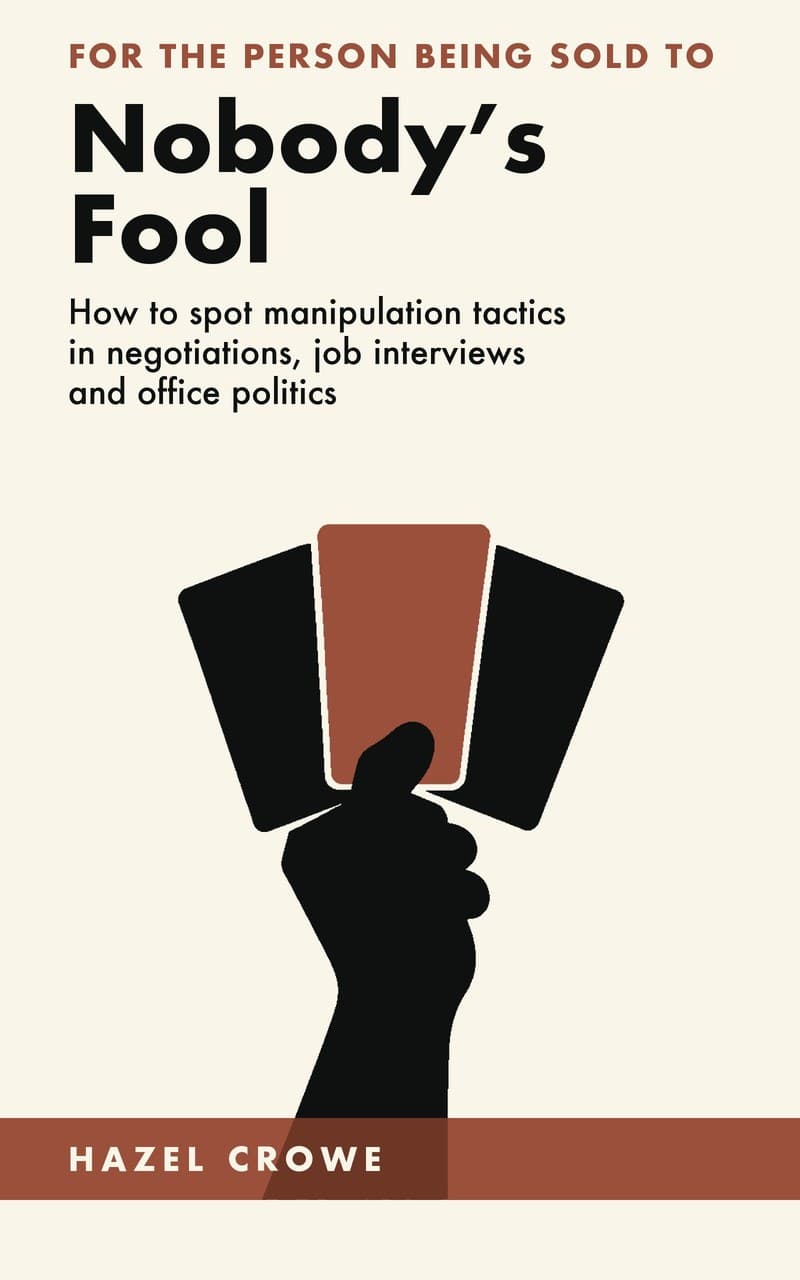
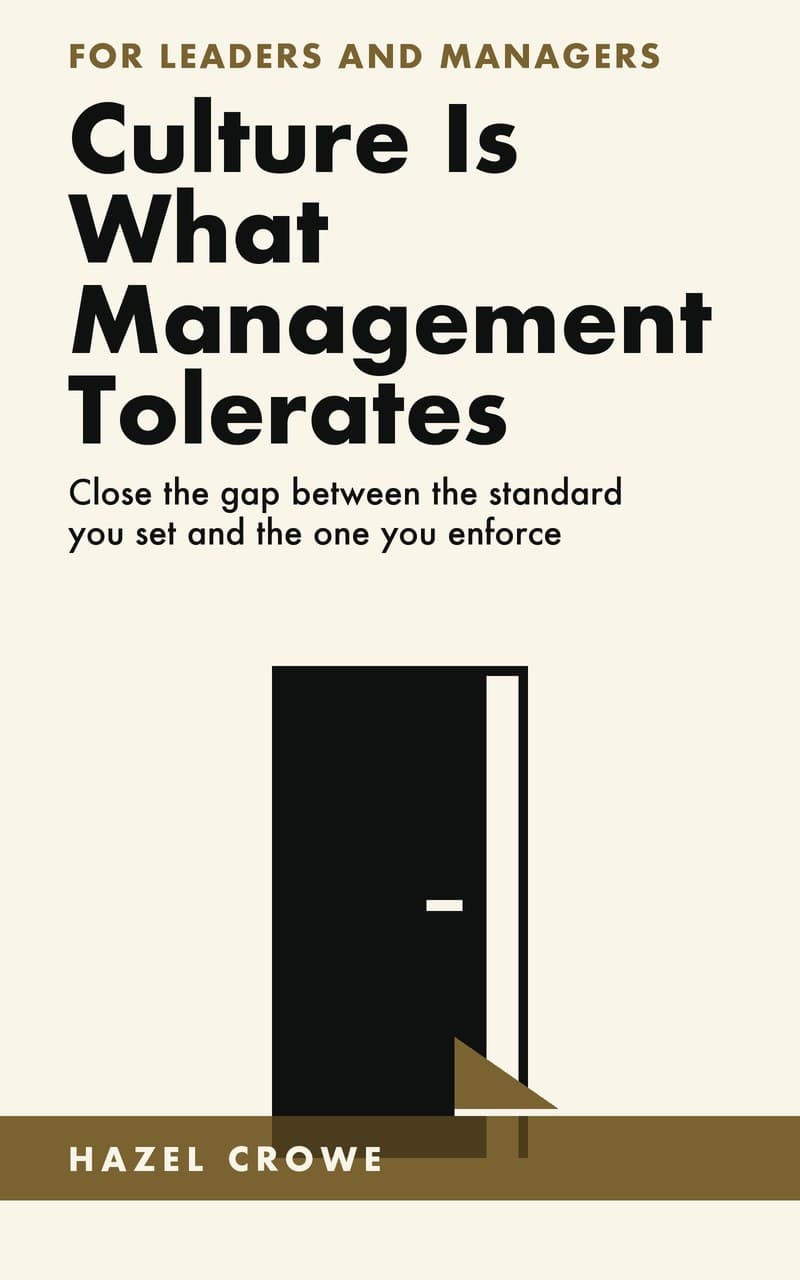
Five Ways of Looking at a Person is the difficult conversation itself. Culture Is What Management Tolerates is the organisation around it, which decides whether the conversation ever happens. If the person across the table is trying to win, read Nobody's Fool.
It is one of four books in Across the Table, and each one reads on its own.
Who it's for
- First-time managers and new team leaders
- Supervisors and small business owners handed a process and told to be fair
- Anyone about to run a disciplinary, grievance, capability or redundancy meeting
- It assumes no HR training
What's inside
- A 15-second habit for your next meeting, in Chapter 1
- The performance conversation: feedback, appraisal and the real reason, without letting the work slide
- Disciplinary, grievance and capability meetings, run fairly when it gets emotional
- Redundancy and exit: what people need to hear in the room
- The conversation you've been dreading, and the version you've rehearsed 30 times
- Three hard conversations run twice, start to finish, through two different lenses
- An 8-question lens audit and a preparation page you can copy for your team
“I was in the room. I can tell you what I watched happen there, about 1,200 times: what was said, what was done, and what followed.”
Questions readers ask
- Does it cover disciplinary, grievance and capability meetings?
- Yes. Part Four walks through the formal process, the performance conversation, redundancy and exit, and the line a manager must not cross.
- Does it tell you what to say, word for word?
- No scripts. Nearly every chapter ends with the same 30 seconds of a conversation played twice, through two lenses, with both endings shown.
- Does it cover employment law?
- It names the Acas Code, the Employment Rights Act 1996 and the Equality Act 2010 as the shape of an obligation only, and tells you to take advice from somebody qualified. It is written from UK workplaces.
- Are the stories real?
- Every conversation is a composite, built from several cases so no real person can be identified.
- Can I share it with my team?
- Yes. Three appendices are made to be photocopied, and it's the book to hand a team leader the week before their first hard meeting.
Free to print
The 2 tools from this book
The pages as they appear in the book, blank, with a PDF for each. Part of The Hazel Crowe Toolkit.
- The lens audit
Eight questions, about 10 minutes. Copy these pages and hand them round a team if they're useful.
- The 10 minutes before
A preparation page, with no promises attached.
Where it comes from
Five Ways of Looking at a Person is written from around 1,200 difficult conversations, on both sides of the table.
Every person and conversation in it is a composite, built so that nobody can be recognised. About Hazel Crowe